Source Eco Friendly Durable Crystal Keychain for Gifts, Promotions, and Decor
Compare 30 listings for eco friendly durable crystal keychain options including stainless steel and natural stone variants. Buyers can evaluate customization, surface treatments, and MOQs from verified suppliers in China.
Key considerations
Products List








Comprehensive Sourcing Guide
Strategic Sourcing Guide for Eco-Friendly Durable Crystal Keychains
The global demand for sustainable promotional items and durable personal accessories has driven a significant shift in the procurement landscape, particularly for products described as eco-friendly and crystal-based. Buyers seeking "eco-friendly durable crystal keychains" must navigate a complex market where terminology often blurs the lines between natural stone, acrylic, and metal composites. This guide provides a disciplined approach to sourcing these items, relying strictly on verified product attributes and established industry practices to ensure quality, compliance, and value. The objective is to equip procurement professionals with the knowledge to evaluate suppliers effectively without relying on unverified marketing claims.
Understanding Material Composition and Terminology
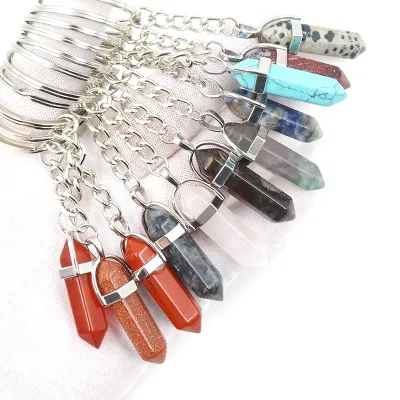
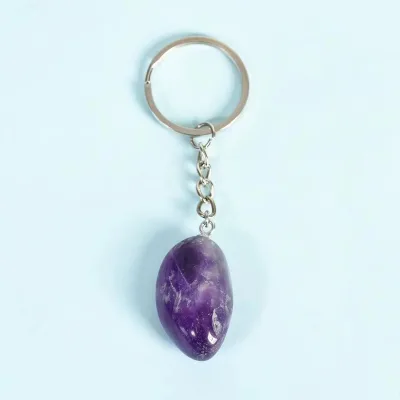
The first critical step in sourcing is clarifying the material definition. The term "crystal" in the keychain market is frequently used loosely. In a strict technical sense, crystal refers to lead glass or quartz, but in the context of the provided product data, the term often encompasses natural stone, acrylic, and metal components. The supplied facts indicate that specific keychains are manufactured from "Natural stone" and "Stainless Steel," while others utilize "Acrylic" materials. A truly eco-friendly durable keychain often leverages natural stone, which is a renewable resource when sourced responsibly, or high-grade stainless steel, which offers exceptional longevity and recyclability.
Buyers must distinguish between "Natural stone" keychains, which feature a "stone: 10x32mm" specification, and "Acrylic Keychain" variants. While acrylic is versatile and allows for custom shapes like "Bag Shape" or "Human" designs, its environmental profile depends heavily on the manufacturing process and the specific polymer used. Stainless steel keychains, characterized by their "Silver" color and "Anti Rust" features, represent the most durable option for long-term use. The "Eco-Friendly" attribute observed in the product data suggests that suppliers may be utilizing recycled metals or sustainable packaging, but this requires direct verification. Procurement teams should request material safety data sheets (MSDS) or specific material composition reports to confirm the "Natural stone" or "Stainless Steel" claims rather than accepting generic descriptions.
Technical Specifications and Customization Capabilities
When evaluating technical specifications, the focus must be on the manufacturing processes that define the product's durability and aesthetic appeal. The supplied data highlights several processing methods, including "Die-Casting," "Engraved," and "Surface Treatment" techniques such as "Polished," "Print," and "Baking Varnish." These processes are not merely decorative; they determine the structural integrity and resistance to wear. For instance, "Baking Varnish" on a natural stone or metal keychain provides a protective layer against moisture and corrosion, enhancing the "Anti Rust" capability essential for outdoor or daily use.
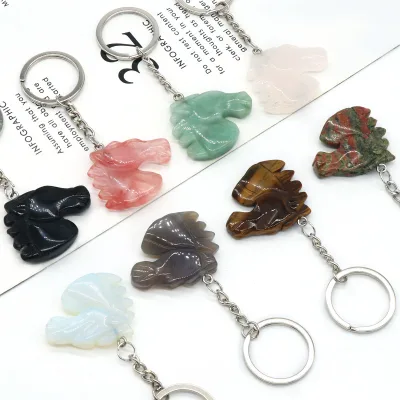
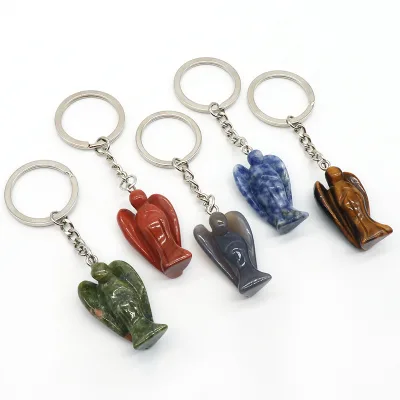
Customization is a primary driver in this sector. The data confirms that "Customization: Available" and "OEM: Yes" are standard offerings. Buyers can expect "Customized" shapes, including "Geometry," "Abstract," and "Human" forms, as well as "Custmized" designs based on specific photos ("as Photo"). The "Multifunction Metal Keychain" models demonstrate that these items often serve dual purposes, acting as "Compass," "Photo Frame," "Flashlight," "Watch," "Bottle Opener," "Coin Holder," or "Holiday" decorations. This multifunctionality adds value but also increases the complexity of the manufacturing process.
The following table outlines the variation in specifications observed in the market, which buyers should use as a benchmark for their requirements:
| Attribute Category | Observed Variations | Procurement Verification Point |
|---|---|---|
| Material | Natural stone, Stainless Steel, Acrylic | Request material certificates or samples for composition analysis. |
| Processing | Die-Casting, Engraved, Polished, Baking Varnish | Verify if the specific finish matches the durability requirements. |
| Shape | Geometry, Abstract, Human, Bag Shape | Confirm mold availability for custom shapes. |
| Size | Normal, Customized, Stone: 10x32mm | Ensure dimensions align with packaging and shipping constraints. |
| Surface Treatment | Print, Polished, Baking Varnish | Test adhesion and resistance to scratching or fading. |
Compliance, Certification, and Environmental Claims
The "Eco-Friendly" claim is a significant factor in modern procurement, yet it is often the most vulnerable to greenwashing. While the supplied facts list "Eco-Friendly" as an attribute, they do not provide specific certification data for every product. The background information mentions potential certifications such as "FSC" (Forest Stewardship Council) and "REACH" (Registration, Evaluation, Authorisation and Restriction of Chemicals), but these are flagged as low-confidence background data. Therefore, buyers must not assume these certifications apply to all listed products.
Procurement teams must treat "Eco-Friendly" as a claim that requires validation. For natural stone keychains, the environmental impact is largely tied to the mining practices and the transportation footprint. For metal keychains, the recyclability of "Stainless Steel" is a key advantage. Buyers should explicitly ask suppliers for proof of compliance with "REACH" regulations, which restrict hazardous substances, and inquire about "FSC" certification if the product involves any wooden or paper-based packaging components. The "Standard size" and "Customized" standards mentioned in the data suggest that suppliers may adhere to specific industry norms, but these should be confirmed against the buyer's internal compliance checklist.
Furthermore, the "Place of Origin" is listed as "China," specifically "Guangdong, China." While this is a major manufacturing hub, it necessitates rigorous supply chain auditing to ensure that environmental standards are met at the source. Buyers should verify if the supplier adheres to international environmental management standards, even if specific ISO certifications are not explicitly listed in the product data. The absence of a specific "ISO 9001:2015" claim in the high-confidence facts means this cannot be assumed; it must be requested as part of the supplier qualification process.
Cost Drivers and Minimum Order Quantity Analysis
Understanding the cost structure of eco-friendly durable keychains is essential for budget planning. The observed price range in the market spans from $0.01 to $3.58 USD. This wide variance is driven by several factors, including material cost, processing complexity, and order volume. Natural stone and stainless steel generally command higher prices than acrylic due to material density and processing requirements like "Die-Casting" and "Engraved" finishes.
Minimum Order Quantity (MOQ) is another critical cost driver. The data reveals a significant range in MOQs, from as low as "50pcs" to as high as "10000" or "10000" units. Some listings specify "Mqq: 500PCS" or "Mqq: 10000," indicating that suppliers have different thresholds for custom versus standard orders. The "Packing" method, such as "1PC/OPP" or "Carton," also influences the final cost, as custom packaging solutions often incur additional fees.
Buyers should note that "Customized" orders typically require higher MOQs to justify the setup costs for molds and custom surface treatments like "Print" or "Baking Varnish." For smaller orders, buyers may need to accept "Standard size" or pre-existing designs to keep costs within the lower end of the observed range. The "Quality: Best" claim suggests that higher prices may correlate with superior craftsmanship, but this must be validated through sample testing.
Supplier Evaluation and Quality Control Protocols
Selecting the right supplier requires a multi-faceted evaluation strategy. The "Brand Name" "fubaoying" is mentioned in the data, but buyers should not limit their search to a single entity. Instead, they should evaluate suppliers based on their ability to meet the specific "Usage" requirements, such as "Promotion Gifts," "Decoration," or functional uses like "Compass" or "Flashlight."
Quality control should focus on the "Surface Treatment" and "Material" integrity. Buyers must verify that "Stainless Steel" components are truly "Anti Rust" and that "Natural stone" pieces are securely attached to the keychain hardware. The "Single package size" of "6X6X5 cm" provides a baseline for logistics planning, but custom sizes will vary. It is crucial to request physical samples that match the "prod_model" specifications, such as "Multifunction Metal Keychain-099L" or "Acrylic Keychain-002U," to test for durability and finish quality.
The "Design: Custmized" and "Design: as Photo" attributes indicate a high level of flexibility, but this flexibility can lead to quality inconsistencies if not managed correctly. Buyers should implement a strict quality control protocol that includes:
- Material Verification: Confirming the composition matches the agreed-upon "Natural stone" or "Stainless Steel."
- Finish Inspection: Checking for uniformity in "Polished" or "Print" surfaces and the durability of "Baking Varnish."
- Functional Testing: Ensuring that multifunctional features like "Bottle Opener" or "Coin Holder" operate smoothly without compromising the structural integrity.
- Packaging Audit: Verifying that "1PC/OPP" or "Carton" packaging protects the product during transit, especially for fragile "Natural stone" items.
Long-Term Procurement and Application Strategy
The long-term success of sourcing eco-friendly durable keychains depends on aligning the product with specific applications. The observed "Usage" categories include "Promotion Gifts," "Holiday," "Decoration," and functional items like "Watch" or "Flashlight." For promotional campaigns, the "Cute" and "Retro" styles may be more effective, while business-oriented gifts might require the "Business" style and "Stainless Steel" material.
Buyers should consider the lifecycle of the product. "Stainless Steel" keychains offer the longest lifespan and are the most recyclable, making them ideal for long-term brand visibility. "Natural stone" keychains, while durable, may require more careful handling to prevent chipping. "Acrylic" keychains, while lightweight and customizable, may degrade faster under UV exposure or harsh conditions.
The "Customization: Available" feature allows for brand integration, but buyers must balance this with the "Eco-Friendly" goal. Over-customization with non-sustainable inks or adhesives can undermine the environmental benefits. Therefore, the procurement strategy should prioritize suppliers who offer sustainable customization options, such as water-based inks for "Print" treatments or recycled packaging materials.
In conclusion, sourcing eco-friendly durable crystal keychains requires a meticulous approach that goes beyond surface-level marketing claims. By focusing on verified material properties like "Natural stone" and "Stainless Steel," understanding the nuances of processing techniques like "Die-Casting" and "Baking Varnish," and rigorously checking compliance and MOQ structures, buyers can secure high-quality products that meet both functional and environmental standards. The wide range of observed prices and MOQs necessitates a tailored approach for each project, ensuring that the final selection aligns with the specific application, budget, and sustainability goals of the organization.
FAQs
What materials are used for eco friendly durable crystal keychains?
These keychains are primarily made from natural stone, stainless steel, or acrylic. Natural stone offers a renewable resource profile, while stainless steel provides exceptional longevity and anti-rust properties suitable for daily use.
Can I get customized designs for these keychains?
Yes, customization is available for shapes, colors, and surface treatments. Buyers can request geometry, abstract, or human shapes, and designs can be based on specific photos with options for engraving or printing.
What is the typical minimum order quantity for these items?
The minimum order quantity ranges from 50 pieces to 10,000 pieces depending on the supplier and customization level. Standard sizes may have lower thresholds, while complex custom molds often require higher volumes.
How are these keychains processed and finished?
Manufacturing involves processes like die-casting, engraving, and various surface treatments. Finishes include polishing, printing, and baking varnish to ensure durability, aesthetic appeal, and resistance to rust or wear.
Where are these keychains typically manufactured?
The products originate from China, specifically from the Guangdong region. This location is a major manufacturing hub, though buyers should verify specific factory locations and environmental compliance during the sourcing process.
What certifications should I look for regarding eco-friendly claims?
While eco-friendly attributes are listed, specific certifications like FSC or REACH are not guaranteed for all products. Buyers must request material safety data sheets or compliance reports to verify environmental claims and chemical restrictions.